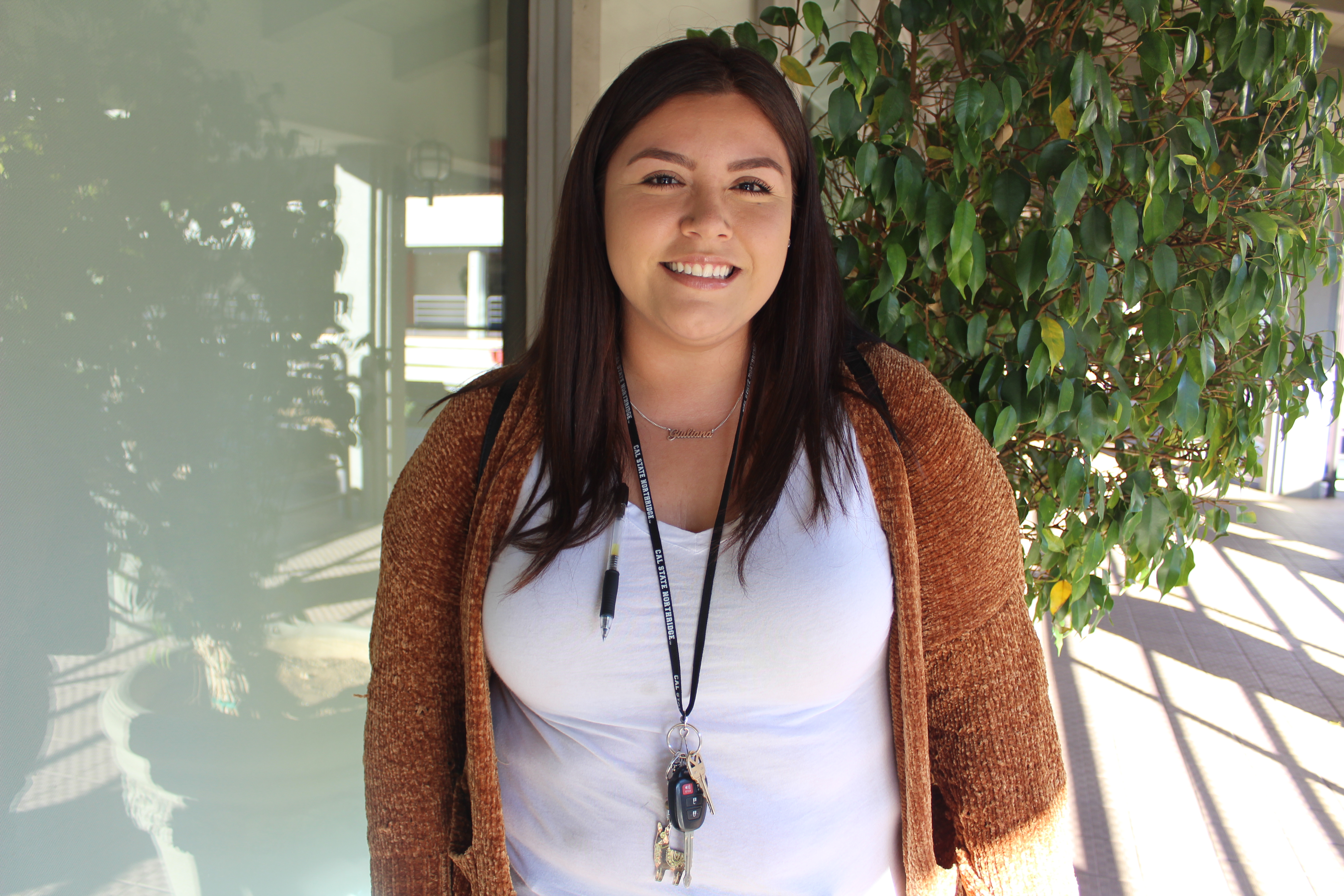
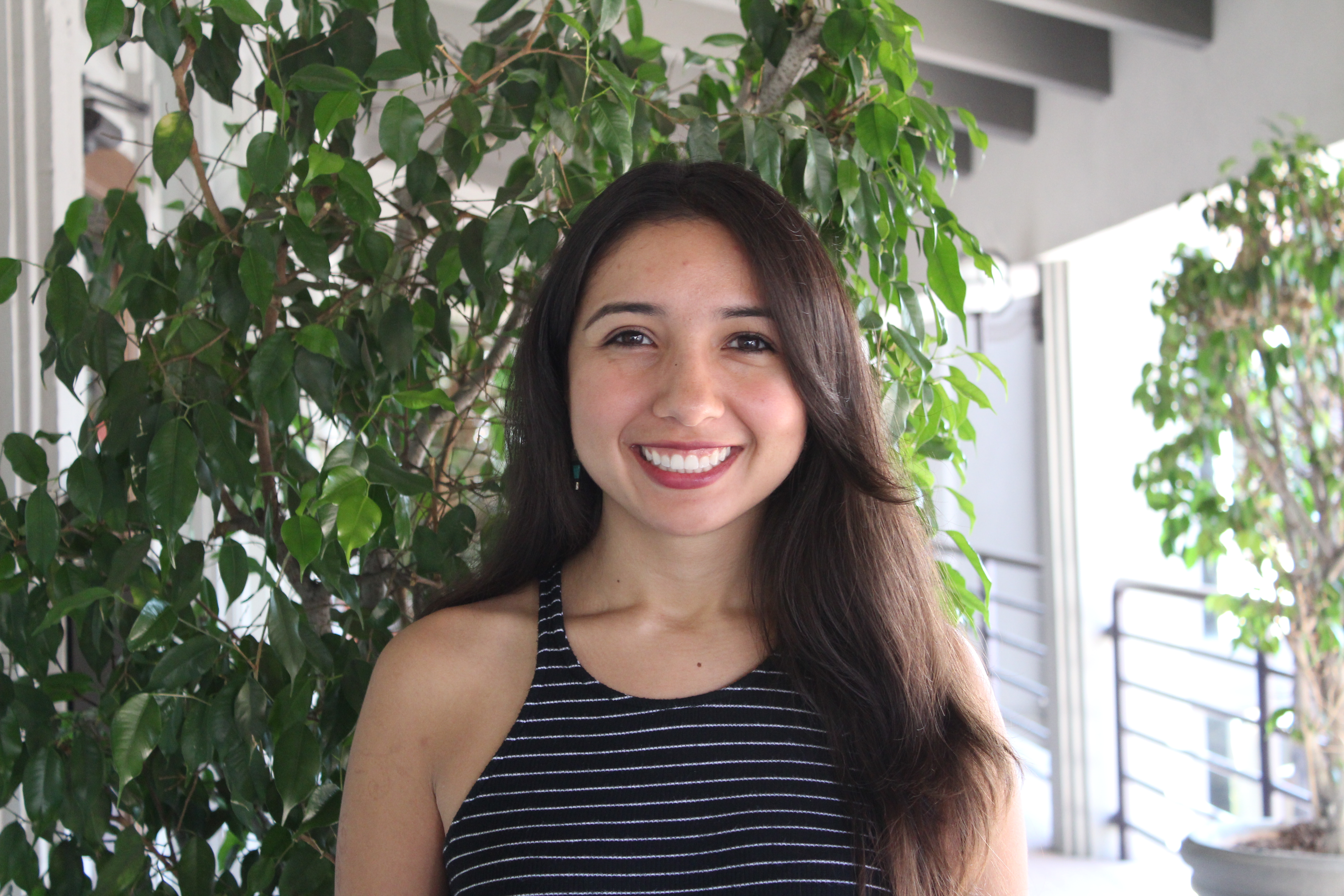
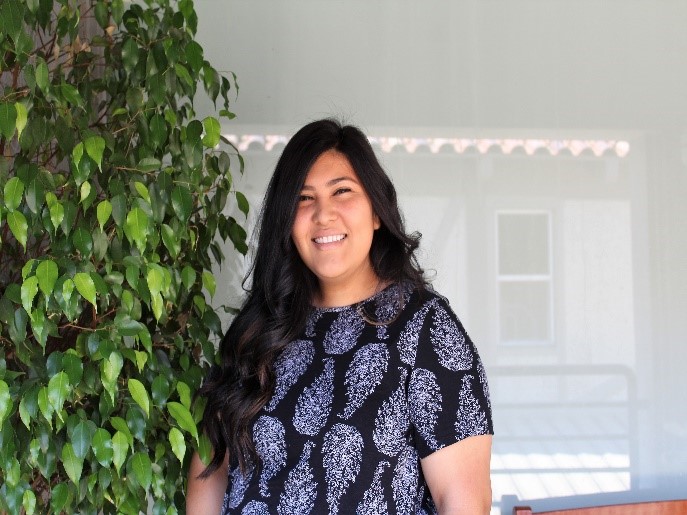
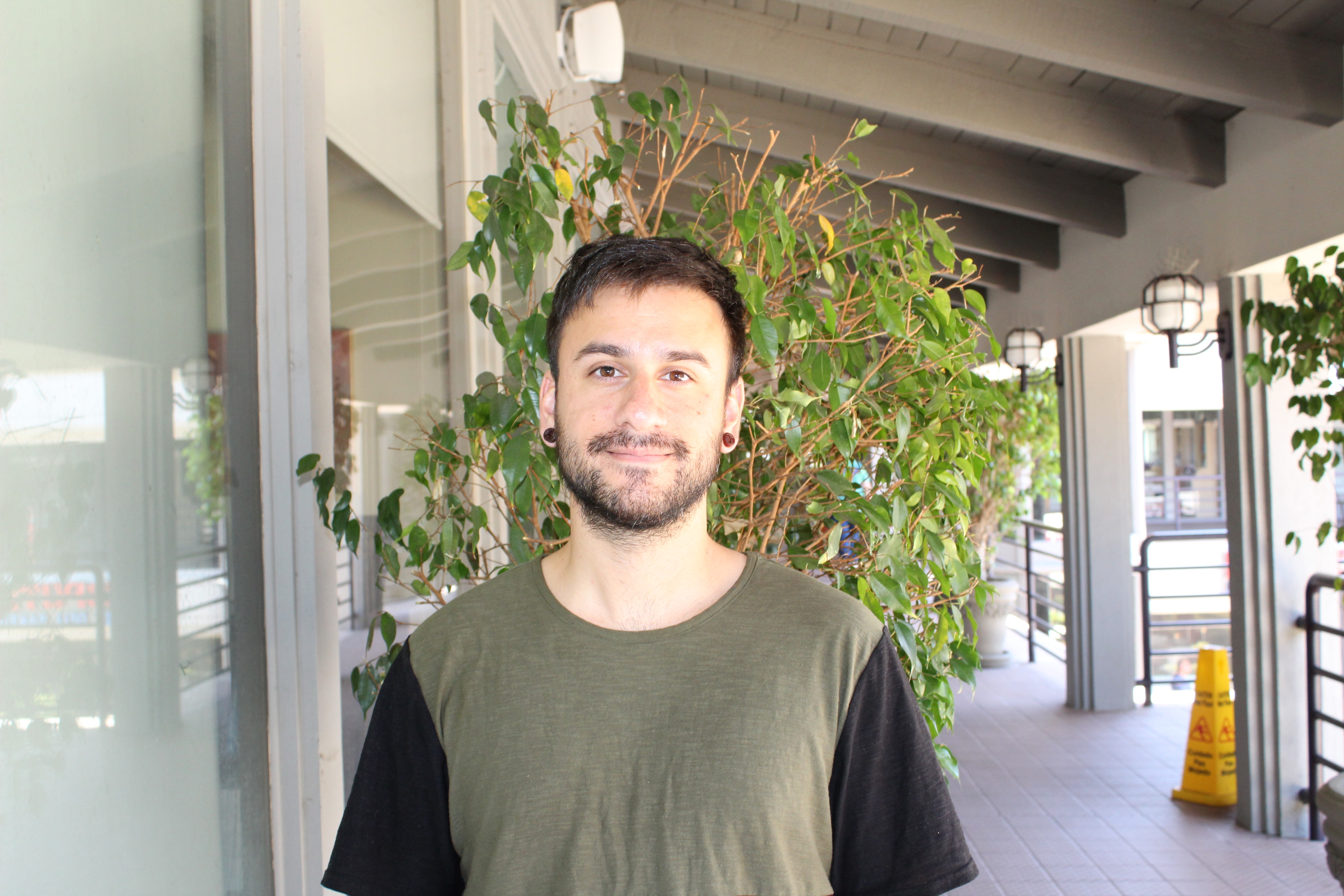
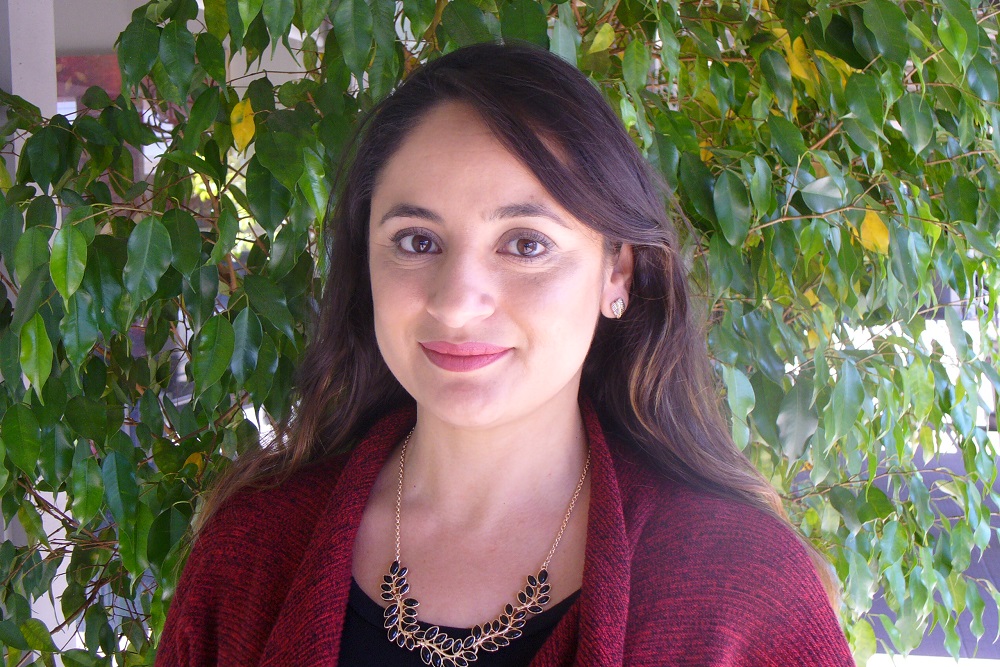
Vanessa was born and raised in Los Angeles, and has lived predominantly in the San Fernando Valley. Vanessa started her journey with ABI in July, 2015 after graduating from CSUN with her bachelor’s degree in Child Development. She already had experience working with children, but wanted to find work that would allow her to apply her degree, and work more hands on. Currently, she attends The Chicago School of Professional Psychology, where she is working toward her master’s degree in Applied Behavior Analysis. Vanessa’s favorite part of her job is the growth she gets to see in our kids, and the laughs she gets to share with them. One of Vanessa’s favorite memories is being silly and making funny faces with her client. When asked what advice she would give a new skills trainer Vanessa said, “Don’t forget to have FUN. You are taking in a lot of information and learning the swing of things, but remember to have fun.” During her free time, she enjoys attending Dodger or Kings games. She also enjoys spending time with family and friends. When asked what would she take if she was on a deserted island, she said she would bring a hammock, an iPod, and headphones. She said, “I might as well make it a vacation.”
Bianca was born and raised in the San Fernando Valley, but graduated high school in El Paso, Texas. Therefore, she is a Californian with some pretty sweet cowboy boots.
She started at ABI after graduating with her Bachelor’s degree from CSUN. Looking for a full time job, she applied for the HR assistant position, not knowing that she would go back to school to get her HR Management certificate and make it her career. It’s nearly five years later, and she is still celebrating ABI-versaries! Bianca’s favorite part of the job is helping to resolve HR related issues that come up throughout the week. If there’s a problem, she’s your gal!
Bianca is a big fan of attending concerts, watching movies, spending time with family, riding her bike, (winning) board games, and of course, shopping.
Her favorite memories at ABI are with her co-workers. She says every day is a laughing riot with the ABI team.
Her advice for new employees would be to take notes. She quoted “I can’t tell you how many times my notes have gotten me out of pickles.”
When she was asked “If you were going to a deserted island, what three things would you bring?” she said, “I’d bring a machete, fire starter, and a solar blanket. Hey, I’ve seen those survival shows too!”
Alisa grew up in Ventura County, and moved to Los Angeles after she met her (now) husband. In her free time she enjoys being outdoors in the fresh air, whether she is hiking, camping, surfing, or snowboarding.
After becoming a BCBA, Alisa got started with ABI when she and a friend who is also a BCBA decided to apply to ABI together. Her favorite part of her job is being part of her clients’ lives, watching them grow and achieve goals, and celebrating their triumphs with them, their families, and their teams. In addition to working directly with clients, she is also grateful for the opportunity to teach skills trainers and caregivers. Alisa will be traveling to India later this year with a non-profit organization, Global Autism Project, to train staff, caregivers, and teachers at an autism site in Bangalore!
Alisa describes one of her favorite memories as: “I was with my first-ever client. He was around five years old at the time and non-vocal, so we were teaching him how to use an AAC device as a primary mode of communication. One day, I was blowing bubbles with him outside, and must’ve said, “bubble” around 100 times by then, when all of a sudden, I hear him vocally echo, “buh-ble” – what an awesome moment for him, his parents, and me all at once! His mother and I cried happy tears and celebrated this tremendous success with him! This particular experience was monumental in my journey to becoming a BCBA.”
Alisa’s advice to new skills trainers is to not be afraid to step out of their comfort zone and run around, literally, with their clients! Also, for them to have confidence in their own knowledge and skills.
Damion started his journey with ABI in June 2015, as he wanted the opportunity to work with children. His favorite part of the work that he does with our clients is being a part of teaching them many skills necessary for them to live a happy life, while being as independent as possible. One of Damion’s favorite memories is when one of his clients was able to build a structure with Legos with very little help. When asked what advice he would give to a new skills trainer, Damion says he would tell them to not be nervous and to have fun with the kids.
Damion is originally from Long Beach, CA. He moved to the valley to attend California State University, Northridge. During his free time, he enjoys going to the gym and watching Netflix.
Jacque joined ABI’s team as a skills trainer in February 2015. Since then she has acquired her registered behavior technician (RBT) credential and has been promoted to a lead RBT position. Her journey with ABI began thanks to her sister, Jacque, also a team member at ABI. Jacque remembers, “I was very excited to apply and I’m glad I did, because I have learned so much and love having a job that is so rewarding.”
As a lead RBT, Jacque especially loves providing ABA treatment at schools and helping her clients be as independent as possible in the school setting. She also greatly enjoys ABI’s team-oriented approach; she loves working with her supervisors, other skills trainers, parents, and teachers. “When you are working with a team it makes a child’s victories so much more fun because you are able to share the successes with so many people!”
Jacque has many favorite memories from the almost four years at ABI and recounted one recent memory that stands out to her. “While at my client’s school, I was talking to my supervisor. My client suddenly turned to me, tapped me, and said, ‘excuse me.’ When I looked at him, he was making perfect eye contact and had his pointer finger to his mouth to shush me! I was proud because I was on his team when three programs were put in place that helped make this moment happen! The first was teaching him eye contact, the second was teaching him to gain a person’s attention by tapping them or saying, “excuse me,” and the third was teaching him common gestures people use. In that moment, he had taken three skills that had been taught to him to let me know that my talking was disturbing his classwork!”
Her advice to new skill trainers is, “(1) Do not be afraid to ask questions! I will always be the person in a team meeting with questions ready to be asked! Do not be afraid to ask for clarification, or for help. I’ve found that supervisors are always willing to answer and help you understand! I have even sometimes asked the same question twice if I still do not understand. It makes you a better skills trainer! (2) Set an alarm for all your administrative duties such a logging Welligent, and locking hours. It will make your life easier those first couple of months when you’re trying to get used to so many new things. (3) Also have a good playlist, podcast, or audiobook for your drive!”
In her free time, Jacque spends time with her chocolate lab, Arrow. Taking him for a walk or to the dog park is one of her favorite things to do after work. She also loves to play board games that are so competitive they almost end friendships.
Thanks, Jacque, for all your hard work and dedication to our kids.
Brandon joined our team at ABI as a skills trainer in November 2014. Since then, Brandon has become a registered behavior technician (RBT) and has undergone additional training and was promoted to the position of lead RBT. Prior to joining our team, Brandon worked in an after-school program that an ABI client attended with one of our skills trainers. That skills trainer, now one of Brandon’s best friends, suggested he apply to ABI and he saw this as an opportunity to grow and learn.
What Brandon enjoys the most about ABA-treatment its focus on problem-solving, regularly asking himself questions like, “How can I take a skill or program and build on it or generalize it? If something isn’t working, how can I bring it to the team, so we can find a new path?” adding, “I find the work that we do and the time we spend with our clients to be extremely important so I want to always keep the ball rolling and teach my clients everything I can.”
Brandon mentioned he has so many amazing memories with every one of his clients over the years that he can’t choose just one. He stated “I’ve always tried to come up with little jokes or silly things that are unique to each client to make them laugh. All my clients have also shown so much tenacity and strength when pushing through. I couldn’t count all the proud memories.”
When it come to new skills trainers, Brandon offered three pieces of advice:
Always be honest, but sensitive when telling parents about difficulties their children are having. And, always keep a list in your mind of the good things that happen during your session. Our clients have so many personal victories and triumphs throughout the day and their parents deserve to hear about how amazing their child is.
Once you are starting to feel comfortable in your role as a skills trainer and you’ve built a rapport with your client, push them to always give their best effort. Know when they are doing their best, given the circumstances, but always encourage them to speak more clearly, work more carefully, and be brave and independent.
Look for all the little things you can do to help your clients build stronger bonds with their families, peers, and teachers. Find all the little things that will help your client participate and engage in their world. Take all those little pieces and try to help your client put them together to live their happiest and most fulfilled life.
Brandon was born and raised in Los Angeles. In his free time, he enjoys gardening, considering himself to be a bit of a plant hoarder. He also enjoys playing video games and recently took up playing dodge ball.
Thanks for being such a valuable member of our team, Brandon!
Crystal joined team ABI in September 2008 and just celebrated 10 years with us! Crystal began as a skills trainer and was promoted to the role of lead skills trainer due to her exemplary performance. In the summer of 2014, Crystal was promoted to her current role as Hiring and Training Coordinator. Crystal excels at this job, which includes overseeing all recruitment, interviewing, hiring, on boarding, and training for new skills trainers. In this role, Crystal is every new skills trainer’s first point of contact. Throughout new skills trainers’ pre-service training and even once training is complete and skills trainers are assigned to clients’ teams, Crystal is a constant and ongoing source of support and guidance. Her passion and dedication for this field and for our kids shines through daily in her work. She is professional in all she does and with everyone she interacts with, and her smile and laughter are infectious. To continue her education and further build her skills in ABA, Crystal recently completed a post-bachelor’s course sequence through the Florida Institute of Technology to become a Board Certified Assistant Behavior Analyst (BCaBA). We are so proud of Crystal’s hard work and perseverance. Crystal is an overall amazing coworker, friend, mentor and team member. Crystal grew up in San Diego and now resides in the San Fernando Valley. She loves coffee, ice cream, and baking, often shares her delicious creations with our office team. We thank you so much for all you do on a daily basis, Crystal!
Cynthia grew up in Los Angeles and has stayed for her family and professional growth. Cynthia was inspired to pursue a career in ABA after working with parents to help them learn strategies to teach their children new skills and manage challenging behaviors. During graduate school in CSUN’s Master of Science in ABA program, Cynthia felt it was important to gain more experience working directly with children receiving comprehensive and focused ABA to be a more effective program supervisor. This is when she became a part of ABI’s team and has felt right at home ever since.
When asked about her favorite memory with a client, Cynthia shared, “I have so many favorite memories! I always leave my clients’ homes or schools with something exciting, fun, or funny to share.” One Cynthia’s favorite memories occurred this past summer, while teaching a preschool-aged girl, Nora, to talk about the world around her. Because Nora greatly enjoyed going for walks, Cynthia would frequently start sessions with a 10-minute walk, during which there were many natural learning opportunities. Nora learned to label houses, cars, birds, flowers, trees, and more on these walks. One day, upon seeing a broccoli as part of a play food set, Nora said, “tree.” While not technically correct, this is a great example of stimulus generalization as broccoli shares many physical properties with a tree and Cynthia could relate, noting, “I remember calling broccoli ‘little trees’ when I was a little girl.”
Her advice to new skills trainers is, “Our job is so fun and rewarding, but it’s also not easy. I would advise new skill trainers to ask questions or for help whenever needed. Also, reaching out to the supervisors for general support is a great idea!”
When she’s not at work, you can find Cynthia reading, watching Netflix, going to the theatre and to concerts, and spending time with friends and family.
by our partners at CSUN’s Functional Assessment and Healthy Behavior Research Lab, recent graduates Elizabeth Hernandez, M.S. and Carissa Basille, M.S., and, Dr. Tara Fahmie.
Children of all ages can sometimes misbehave. The severity of problem behavior can vary with some problem behaviors being manageable and others causing concern. Not knowing why a behavior is occurring can cause stress within the parent-child relationship. As a parent, it can be frustrating to want to help your child and not know exactly what his or her needs are. Additional stresses and concerns for the child’s safety and the safety of others is also present if the child’s behavior involves aggression. Problem behaviors, if not managed early, can interfere with opportunities at home, in the community, and at school. For example, if a child is consistently running away from their seat during class time, the likelihood of engaging with the learning material is low.
The field of applied behavior analysis has discovered three common and natural reactions to problem behavior that might increase it in the long run. Understanding these common reactions (which involve delivery of attention, escape, and preferred items) can better equip parents in finding solutions.
Attention
Problem behaviors can occur because they have helped a child get attention from other people. Attention, like problem behavior, comes in various forms such as praise, reprimands, play time, eye-contact, etc. Remember that attention, whether “good” or “bad”, is still attention. An example of this could be when a child writes on furniture with a marker and as a result a parent begins to chase him or her around the house. Sometimes parents make the assumption that reprimands may aid in the reduction of a behavior. Unfortunately, if the behavior continues to occur consistently or even more following a reprimand, this type of attention could inadvertently be maintaining the unwanted behavior. Another example is in the classroom setting with the interaction between the “class clown,” the teacher, and other students in the class. When the class clown acts out, they may be receiving two forms of attention: peers providing praise and laughter while the teacher provides reprimands. Although these types of attention look very different from each other, they both are factors that could be maintaining the problem behavior. Caregivers could use some of the following strategies to reduce problem behavior that is maintained by attention. The first strategy is to provide attention frequently during downtime or when the child engages in appropriate behavior. For example, if a child is playing on her own, caregivers can provide praise statements like “Good job!” or “I like how you’re playing!”. Another example of when to provide attention is if a child appropriately asks for it. The amount of attention does not have to be massive, meaning that caregivers do not have to spend hours or provide exaggerated amounts of praise. In most cases a couple of minutes of playtime or a couple of praise statements are effective.
Escape or Avoidance
Problem behaviors can also occur because they have helped a child to escape or avoid non-preferred items or activities. For example, a child might engage in problem behavior to escape or avoid chores, homework, or bedtime. The problem behavior could also occur to avoid a specific object. An example of this is a child engaging in screaming and crying to avoid a dog or avoid the presentation of vegetables during dinner time. Activities or items that are being avoided are not necessarily bad for the child. For example, let’s say a child begins to whine and complain when she’s told that it is time to complete chores around the house. If this results in the parent doing the chores for the child, the child has avoided having to do chores. The problem behavior may be escape maintained if whining and complaining consistently gets a child out of chores. Similarly, if a parent provides a time out following whining and complaining about chores, they may be making the whining and complaining more likely in the future by allowing escape. To reduce the likelihood of escape-maintained problem behaviors occurring, a parent can provide small frequent breaks from an activity prior to the occurrence of the problem behavior. Parents can also make an activity more fun or break it down into easier steps for the child.
Access to Preferred Items / Activities
A third possible reason problem behavior may continue to occur is because it has helped a child get preferred items or activities. For example, a child scream or cry when his parent tells him he can’t have a snack before dinner. If this immediately results in the parent allowing the child to have the snack, crying and screaming have helped the child gain access to something preferred. The child is also more likely to cry and scream in similar situations in the future. One strategy that a caregiver can use to decrease the likelihood of the problem behavior helping a child get preferred items is to offer a preferred alternative when having to say, “no.” For example, if a child asks for a snack right before dinner, the parent could say, “We can’t have a snack, but we can have dinner right now.”
If a parent is not seeing a decrease in their child’s problem behavior or is seeing an increase, the best next step would be to bring their concerns to their supervisor. Addressing a problem behavior sooner rather than later can help reduce the likelihood of it getting worse. Parents shouldn’t be afraid to take it a step further and take some brief data at home. Recording information such as time of the behavior, what occurs prior to the behavior, the exact behavior occurring, and what occurs in immediately after is information that can help the supervisor develop solutions. Remember that as Board-Certified Behavior Analysts (BCBAs), our supervisors are here to help address parent concerns. Providing them with an idea as to why the behavior could be occurring is a great way to be involved in finding solutions.
This is a continuation of a previous blog post entitled “A Twist On Teaching” that explained two ways to enhance teaching: embedding teaching into activities and including group activities. Many more of these methods exist and in this “Part 2” post, we will elaborate on this topic and discuss how you can further enhance teaching by:
Gamifying the learning process
Picking what your children prefer
Gamification:
A fantastic way to enhance the learning process is to make learning itself a game! One great way to do this is to incorporate competitive and cooperative components into the activities that are entirely dependent on correct responding of the skills.
Competition:
Children can be split up into teams. When a child on a team correctly engages in the skill, their team can earn a star. The star can be placed on a “leader board” (see example below). The first team that earns enough stars to reach a goal can get access to a reward like a dance party, toys, or snacks. The goal is chosen before the activity and can be adjusted based on performance.
Example Competition Leader Board:
In this example, Team B reached the goal (the black square which is placed at 4 stars) first, and thus gained access to the reward.
Cooperation:
Children can all be in a single group. When any child correctly engages in the skill, the entire group can earn a star. The star can be placed on a “leader board” (see example below). If the entire group earns enough stars to reach the goal, they can all gain access to a reward. If the children do not reach the goal, then they all do not gain access to the reward.
Example Cooperative Leader Board:
In this example, the group earned enough stars to reach the goal (the black square which is placed at 6 stars) before the end of the game, and thus gained access to the reward.
Rewards that can be used can consist of dance parties, snacks, high-fives, hugs, access to toys etc. To find what rewards children like most, you can ask the children what they prefer (see more below)!
Child Preference:
Preference is an important and effective technique to add to teaching! Asking children what they prefer can increase successful teaching and allows the child to be a part of the learning process. There are multiple ways to incorporate preference into teaching. We have outlined a couple below:
Rewards that children can earn or win: Preference can be used to find out what items the children want as a reward following accurate responding in teaching. These items can include food, toys, technology, and more! Using the items the children prefer as rewards can increase their accurate responding in the future! Preference for these items can be determined a few different ways.
-One way is to ask the children what they would like to earn. Teachers can also provide options for the child to pick from (i.e. “Would you like to earn the iPad, your doll, or a book?”).
-In addition, laying out some potential items in front of the child and asking the child to pick one is another great way to find out what the child prefers to play with or earn following correct responding.
-Another way to determine rewards a student can earn is to watch the student in the room with all their toys. By doing this, you can see which toys the student spends the most time with and then use those toys as the rewards.
Preferred games to play: Preference for the different types of games you play during instruction can also be determined.
This can be done by either asking the child what game they want to play or even having a picture of the games present in front of the child and asking them what game they would like to play.
Preference for how you teach: You can also ask children which teaching style or methods they like best. For example, you can find out whether children prefer being taught in competitive or cooperative teaching styles, table top or on the floor, or even group or individual teaching.
You can do this by associating a specific color or picture with the different teaching styles. The pictures can be associated with the teaching styles. After each picture has been associated with the teaching styles multiple times, you can lay the pictures out in front of the child ask them which they prefer.
Adding choice and preference, regardless of what it is or how you do it, could truly enhance the overall education process. By discovering child preference, you can teach in the preferred style and allow the child to excel!
Summary: These two unique methods continue to provide a twist on teaching and can be very beneficial for our children. Even research conducted right here at ABI has shown that children can excel in these fun and engaging teaching environments just like these! Turning education into a game itself and asking for child preference all provide exciting, unique, and captivating ways to teach!