
Social Skills Groups for Children and Teens
Social Skills Groups
Building meaningful connections, communicating with others, and participating in social activities are important parts of everyday life. At Autism Behavior Intervention (ABI), our social skills groups provide structured opportunities for children to practice communication, peer interaction, and relationship-building skills in a supportive environment.
Our approach recognizes that every child has different social preferences, abilities, and learning needs. Through guided activities, interactive play, and opportunities for peer engagement, participants can develop practical skills that support social participation at school, at home, and in their communities.
What Are Social Skills Groups?
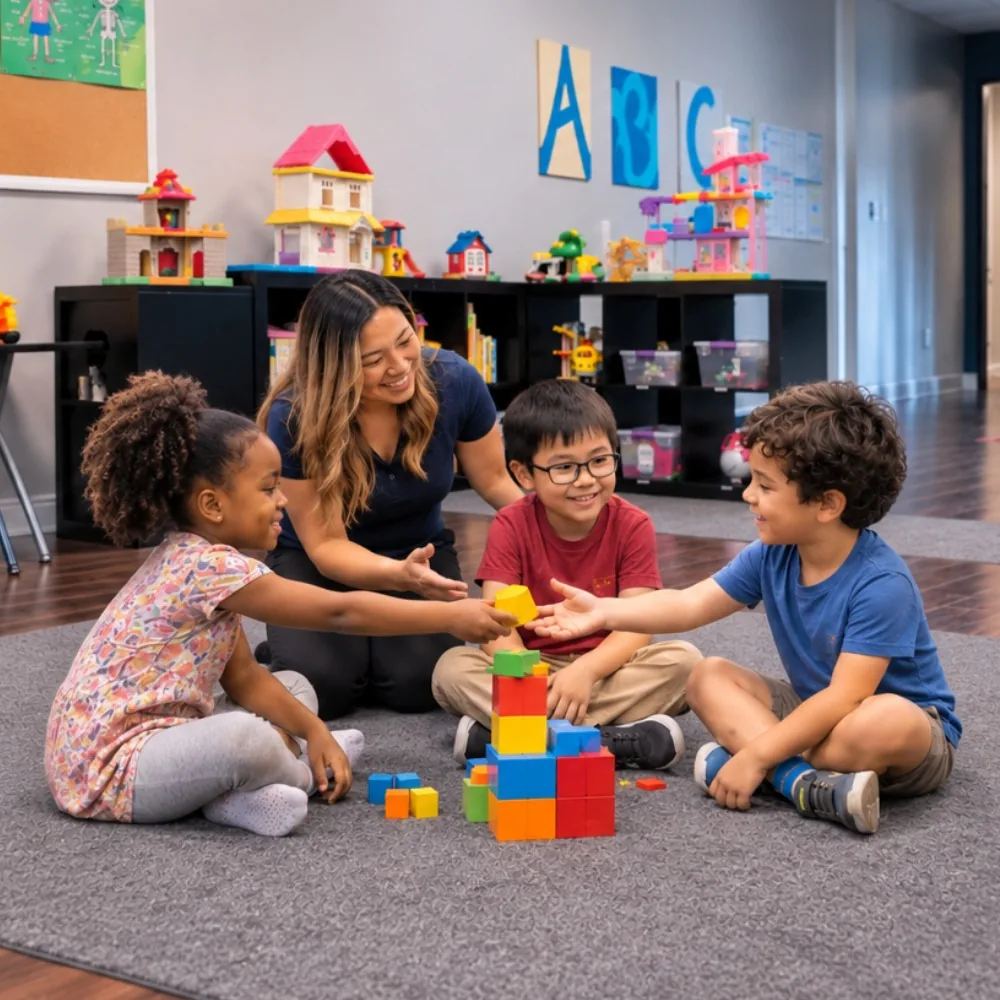
A social skills group is a structured learning environment where participants practice communication, interaction, and social participation with guidance from trained professionals.
For children with autism, group-based learning can provide opportunities to practice skills that may be difficult to develop through individual instruction alone.
Activities may focus on initiating conversations, taking turns, understanding social situations, cooperating with peers, and communicating personal needs.
Effective social skills instruction should recognize different communication styles and avoid requiring children to hide natural autistic traits simply to appear socially typical.
How Do Social Skills Groups Work?
Social skills groups use structured activities, guided interaction, and practical learning opportunities to help participants develop social communication skills.
Depending on individual needs, sessions may involve cooperative games, role-playing, conversation practice, and group problem-solving.
The objective is to help participants understand and practice useful skills while developing confidence in social situations.
Group activities should be adapted to participants’ developmental levels, interests, and communication abilities.
Benefits of Social Skills Groups for Children With Autism
Social interaction involves many different skills, including communication, understanding others, expressing preferences, and navigating shared activities.
Structured group learning can provide opportunities to practice these abilities in a supportive setting.
1. Developing Communication Skills
Children can practice expressing ideas, asking questions, requesting help, and responding during conversations.
Activities may support verbal communication, gestures, visual communication, or other appropriate methods.
2. Building Peer Relationships
Social skills groups create opportunities for children to interact with peers who may share similar learning goals.
Guided activities can help participants practice cooperation, shared interests, and positive relationship-building.
3. Practicing Turn-Taking and Cooperation
Group games and activities provide natural opportunities to practice waiting, sharing materials, negotiating preferences, and participating in common goals.
These experiences can support participation in school and community activities.
4. Strengthening Emotional Awareness
Children may benefit from learning to recognize their emotions, communicate discomfort, and understand how different situations affect them.
Activities can introduce practical ways to express feelings and request support.
5. Supporting Social Confidence
Repeated opportunities to practice social skills in a respectful environment may help some children feel more comfortable participating in group activities.
Progress varies according to each child’s needs, interests, and experiences.
6. Applying Skills in Everyday Situations
Skills practiced during group sessions may also be useful during classroom activities, family gatherings, playground interactions, and community experiences.
Additional practice across environments can help children use learned skills more independently.
Social Skills We Focus On
Our approach to social learning emphasizes functional communication, meaningful interaction, and participation in everyday activities.
The specific skills addressed should reflect participants’ individual needs and developmental goals.
Conversation and Communication Skills
Participants may practice starting conversations, asking relevant questions, listening to others, and communicating their own ideas.
Learning activities can also address recognizing when someone needs clarification or when a conversation requires additional support.
Friendship and Relationship-Building
Developing friendships involves shared interests, mutual respect, and communication.
Group activities may help children identify common interests, invite others to participate, and maintain positive peer interactions.
Understanding Social Situations
Children may encounter different expectations during classroom activities, games, and community events.
Guided practice can help participants recognize social cues, understand boundaries, and respond appropriately while respecting their own comfort levels.
Cooperation and Group Participation
Working with others involves communication, flexibility, and shared decision-making.
Participants may practice completing activities together, contributing ideas, and respecting different preferences.
Emotional Regulation and Problem-Solving
Social situations can sometimes involve misunderstandings, frustration, or disagreements.
Group learning may introduce strategies for requesting breaks, expressing feelings, resolving conflicts, and seeking assistance when needed.
Social Skills Groups for Different Age Groups
Social learning needs change as children grow. Activities that support younger children may differ from those appropriate for teenagers or adults.
For this reason, social skills programs should consider developmental stage, communication abilities, and individual interests.
Social Skills Groups for Young Children
Younger children may benefit from activities focused on play, communication, shared attention, and participation in group routines.
Guided games and interactive activities can provide opportunities to practice turn-taking, requesting assistance, and cooperating with others.
Social Skills Groups for School-Age Children
School-age children may need support navigating friendships, classroom interactions, teamwork, and social problem-solving.
Structured group activities can help children practice communicating with classmates, participating in shared tasks, and expressing preferences appropriately.
Social Skills Groups for Teens
Social skills groups for teens often address social situations that become more complex during adolescence.
Relevant topics may include maintaining friendships, participating in conversations, understanding personal boundaries, handling disagreements, and communicating in group settings.
Teenagers may also benefit from opportunities to practice self-advocacy and express their preferences in social situations.
Please contact us to confirm current teen group availability.
Social Skills Groups for Adults
A social skills group for adults may focus on communication, relationships, workplace interactions, community participation, and self-advocacy.
Adult social learning needs are different from those of children and adolescents. Programs should respect adult independence, personal goals, and communication preferences.
Please contact us to confirm current adult program availability.
How Social Skills Group Sessions Support Learning
Effective group-based instruction combines clear learning goals with opportunities for natural interaction.
Understanding Individual Needs
Participants may have different communication abilities, social preferences, and learning goals.
Understanding these differences helps determine which activities and levels of support are appropriate.
Guided Group Activities
Structured activities provide opportunities to practice specific skills in an organized setting.
Examples may include cooperative games, role-playing, discussion activities, and shared problem-solving tasks.
Opportunities for Peer Interaction
Practicing with peers allows participants to experience different communication styles and social situations.
Support should encourage respectful interaction without forcing unwanted social participation.
Positive Feedback and Skill Development
Appropriate encouragement and constructive feedback can help participants recognize useful strategies and build confidence.
Learning activities should be adjusted when a participant needs additional support.
Practicing Skills Beyond the Group
Social learning continues outside scheduled sessions.
Families and caregivers can encourage appropriate opportunities to practice communication, cooperation, and problem-solving during everyday activities.
Social Skills Groups vs. Individual ABA Therapy
Social skills groups and individual ABA therapy can address related developmental goals, but the learning environments differ.
| Social Skills Groups | Individual ABA Therapy |
|---|---|
| Focus on guided peer interaction | Focuses on individualized instruction |
| Provide opportunities for group participation | Allows focused one-on-one teaching |
| Support communication in shared activities | Addresses individual treatment goals |
| Include cooperative learning opportunities | Uses personalized teaching strategies |
| Allow practice with different peers | Can prepare skills for use in group settings |
Some children may benefit from both individualized instruction and structured peer interaction.
The appropriate combination depends on each child’s developmental needs, preferences, and treatment recommendations.
Why Choose Autism Behavior Intervention for Social Skills Support?
Families exploring social skills groups want opportunities that support meaningful communication, peer relationships, and participation in everyday activities.
Autism Behavior Intervention focuses on individualized ABA-based support for children with autism, including communication, social interaction, and functional skill development.
When considering group-based services, families should look for developmentally appropriate activities, respectful teaching practices, clear goals, and opportunities to apply skills outside sessions.
Social development should not be measured solely by eye contact, conformity to social expectations, or the number of interactions a child completes.
Meaningful progress can also involve communicating boundaries, asking for help, expressing preferences, and participating in relationships that feel comfortable and rewarding.
Who Can Benefit From Social Skills Groups?
Social skills groups may be appropriate for children who would benefit from additional opportunities to practice communication, peer interaction, cooperation, or social problem-solving.
They may be particularly useful for children who have difficulty joining group activities, maintaining conversations, expressing needs, or navigating disagreements.
However, group-based learning is not suitable for every child at every stage.
Individual communication needs, sensory preferences, readiness for group participation, and professional recommendations should help guide decisions.
Families can contact ABI to discuss available services and whether group-based support is appropriate for their child.
Frequently Asked Questions About Social Skills Groups
1. What is the purpose of a social skills group?
A social skills group provides structured opportunities to practice communication, peer interaction, cooperation, and social problem-solving. Activities are designed to support meaningful participation in everyday situations.
2. Can social skills groups help children with autism?
Social skills groups may help children with autism practice communication and interaction skills in a supportive setting. Benefits depend on individual needs, appropriate teaching strategies, and opportunities to apply skills outside the group.
3. Are social skills groups available for teens?
Social skills groups for teens can focus on friendships, communication, personal boundaries, and self-advocacy. Please contact ABI to confirm whether age-appropriate teen groups are currently available.
4. Does ABI offer social skills groups for adults?
Adult social skills groups may address relationships, workplace communication, and community participation. Please contact ABI to confirm current adult program availability before making enrollment plans.
5. How do parents know whether a social skills group is right for their child?
Parents should consider their child’s communication needs, social goals, sensory preferences, and comfort with group activities. Discussing these factors with a qualified professional can help determine whether group-based learning is appropriate.
Learn More About Social Skills Groups at Team ABI
Meaningful social development begins with understanding each person’s strengths, interests, and communication needs.
Autism Behavior Intervention supports individualized learning and skill development for children with autism. Families interested in social skills groups can contact ABI to ask about available programs, age eligibility, group activities, and enrollment requirements.
Explore opportunities to support communication, peer interaction, and greater participation in everyday life.
Phone: 844-646-7516
Explore Our Services